DRAFTING THE FIRST CONSTITUTION FOR AI AND AGI
The US Constitution — Born Out of Betrayal and Good Judgment
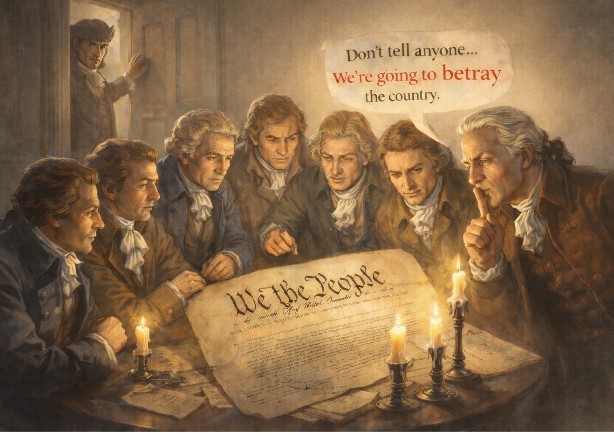
The men sent to Philadelphia to amend the Articles of Confederation ignored their instructions, locked the doors, and wrote something else entirely. That is the betrayal. The judgment is that they were right.
The United States Constitution is the product of a profound contradiction.
It is a document born from betrayal—and from good judgment.
The betrayal is often forgotten. The judgment is often romanticized. But both must be understood together if we are to understand what the Constitution actually represents.
Before the Constitution, there was the Articles of Confederation. The Articles were weak. They gave the federal government almost no power. They could not tax. They could not regulate commerce. They could not enforce treaties. They could not raise an army.
The United States was a confederation in name only—a loose collection of states that were rapidly descending into economic chaos, diplomatic irrelevance, and internal conflict.
Then came the betrayal.
The men who wrote the Constitution did not have the authority to rewrite the government. They were sent to Philadelphia to amend the Articles of Confederation—not to replace them.
They ignored their instructions. They locked the doors. They wrote an entirely new document in secret. And they presented it to the nation as a fait accompli.
That is the betrayal.
But the judgment? The judgment is that they were right. Not about everything—but about the necessity of a stronger, more unified national government.
The Constitution has been amended, challenged, fought over, and interpreted in radically different ways. But it has also lasted. It has survived. And it has become the foundation of the most powerful nation in human history.
This is the redesign of politics.
Not to worship the Constitution. Not to burn it.
To understand it—and to learn from its paradoxes.
READ IT IN FULL buymeacoffee.com ↗