BORN OUT OF BETRAYAL AND GOOD JUDGMENT
THE US CONSTITUTION
The United States Constitution is the product of a profound contradiction.
THE ARGUMENT
The US Constitution — Born Out of Betrayal and Good Judgment
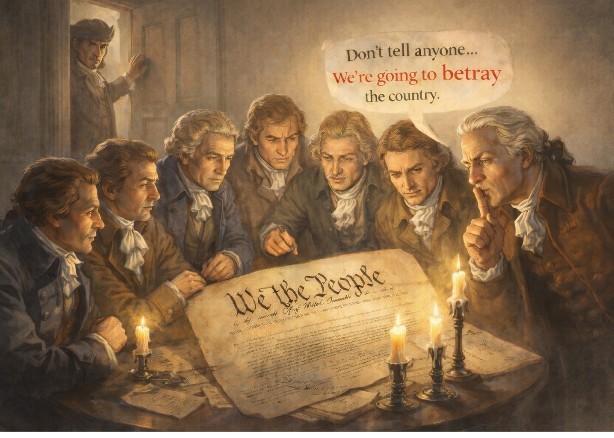
It is a document born from betrayal—and from good judgment.
The betrayal is often forgotten. The judgment is often romanticized. But both must be understood together if we are to understand what the Constitution actually represents.
Before the Constitution, there was the Articles of Confederation. The Articles were weak. They gave the federal government almost no power. They could not tax. They could not regulate commerce. They could not enforce treaties. They could not raise an army.
The United States was a confederation in name only—a loose collection of states that were rapidly descending into economic chaos, diplomatic irrelevance, and internal conflict.
Then came the betrayal.
The men who wrote the Constitution did not have the authority to rewrite the government. They were sent to Philadelphia to amend the Articles of Confederation—not to replace them.
They ignored their instructions. They locked the doors. They wrote an entirely new document in secret. And they presented it to the nation as a fait accompli.
That is the betrayal.
But the judgment? The judgment is that they were right. Not about everything—but about the necessity of a stronger, more unified national government.
The Constitution has been amended, challenged, fought over, and interpreted in radically different ways. But it has also lasted. It has survived. And it has become the foundation of the most powerful nation in human history.
This is the redesign of politics.
Not to worship the Constitution. Not to burn it.
To understand it—and to learn from its paradoxes.
PART ONE — CIVIC LESSON: THE US SYSTEM
Before the Constitution — The Story America Rarely Tells
A nation must sometimes break its own rules to save itself.
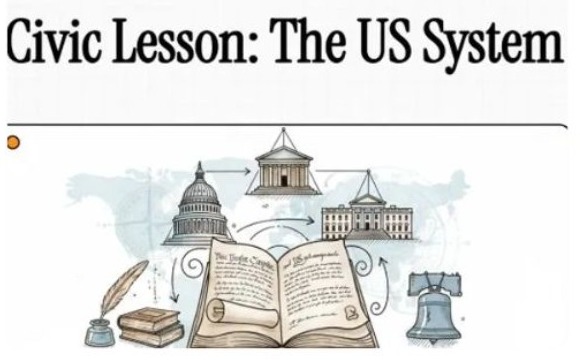
Before the United States Constitution, there were the Articles of Confederation.
Written during the American Revolution, the Articles created a national government built on a "firm league of friendship" among the states. It was a system designed to limit federal power—reflecting deep fears of centralized authority that had driven the colonies to war against Britain.
But the Articles were too weak to hold the nation together.
The Confederation faced massive war debts with virtually no authority to compel its members to pay them. It experienced punishing trade restrictions from Britain and Spain. Pirates in the Mediterranean captured American ships and sailors, and the national government had no navy to protect them. States could levy tariffs on each other's goods. There was no executive branch to enforce laws, no national court system, and amendments required a unanimous vote.
The crisis came to a head in 1786 and 1787 in western Massachusetts.
Farmers, crushed by high taxes and debts they could not pay with worthless paper money, rose up in armed rebellion. Led by Captain Daniel Shays, they marched on the federal arsenal in Springfield. The Continental Congress voted unanimously to raise an army to put down the rebellion—but could not coax the states to provide the necessary funds. The army was never assembled.
That moment changed everything.
Shays's Rebellion became a vivid symbol of state governments running wild—proof of the Articles' inability to protect the nation. It convinced America's leaders that reform was no longer optional.
In 1787, Congress reluctantly called for a convention to revise the Articles of Confederation. Twelve states sent delegates to Philadelphia. They were given a limited mandate: amend the Articles.
What happened next is the story America rarely tells.
The delegates locked the doors, swore secrecy, and did something they had no authority to do. They threw out the Articles entirely and wrote an entirely new constitution.
That act—part betrayal, part genius—is the subject of this series.
This is the story of how a failed first government gave birth to the most powerful nation in human history.
And it is the story of how a nation must sometimes break its own rules to save itself.
PART ONE — USA FROM SCRATCH
A Country Invented From Scratch
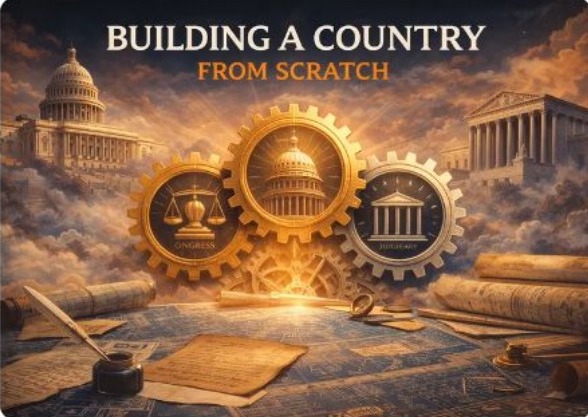
The United States of America was not discovered. It was not inherited. It was designed.
Before the United States, nations were born from bloodlines, conquest, and centuries of slow accumulation. A king claimed a land. Armies conquered it. Generations inherited it. That was the natural order of things.
Then came an idea that had never been tried at scale.
A country invented from scratch.
Not by accident of birth. Not by divine right of kings. Not by ancient tribal loyalty. But by a group of men who sat in a room and wrote down what they believed a nation should be.
They had no army when they started. No treasury. No navy. No international recognition. What they had was a belief that government should rest on the consent of the governed—and the courage to act on that belief.
The United States of America was not discovered. It was not inherited. It was designed.
This is the story America rarely tells. Not the mythology of George Washington and cherry trees. Not the romanticized version of pilgrims and pioneers. The real story of how a handful of flawed, ambitious, brilliant men—deeply divided by interest, geography, and principle—managed to invent a country that has lasted longer than any other modern republic.
It is the story of what happens when human beings decide that the past is not destiny.
And it is the story of what happens when that decision is followed by the hard, unglamorous work of building.
This is the redesign of politics—because politics begins when a group of people decides that the future can be different from the past.
PART THREE — USA FROM SCRATCH
The President — Power Feared, Power Contained
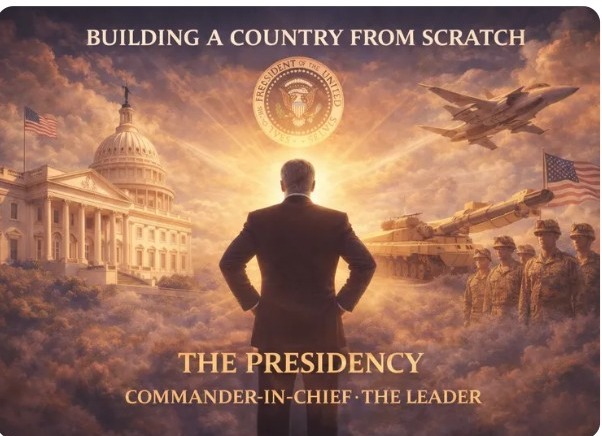
The Presidency was created to execute, not to dominate.
The word President comes from Latin praesidere — meaning to preside, to sit in front, to manage, to oversee.
It does not mean ruler, king, supreme leader, or lawmaker.
From the beginning, the President was designed to be a manager of decisions made by others — not the source of those decisions.
The framers knew two things were true at the same time:
Government needs speed in emergencies.
Power becomes dangerous when it belongs to one person.
So they created an executive who could respond quickly, organize defense, carry out laws — but only within limits set by Congress and the Constitution.
The Presidency was created to execute, not to dominate.
Today, the Presidency is not proof of strength. It is proof of systemic collapse.
It shows us what happens when judgment disappears. What happens when Congress surrenders. What happens when courts legitimize imbalance. What happens when citizens are reduced to spectators.
You are not inheriting a perfect republic. You are inheriting a betrayed experiment.
That is not an insult. It is a responsibility.
The Presidency does not need worship. It needs re-containment.
The Constitution does not need blind loyalty. It needs informed citizens.
And democracy does not die from disagreement. It dies when judgment is replaced by money, spectacle, and fear.
This is where your education begins. Not with reverence. Not with slogans. But with honesty.
The experiment can be repaired. But only if new citizens understand what failed — and why.
This is not the end of the Constitution.
This is the moment it demands to be understood again.
USA FROM SCRATCH
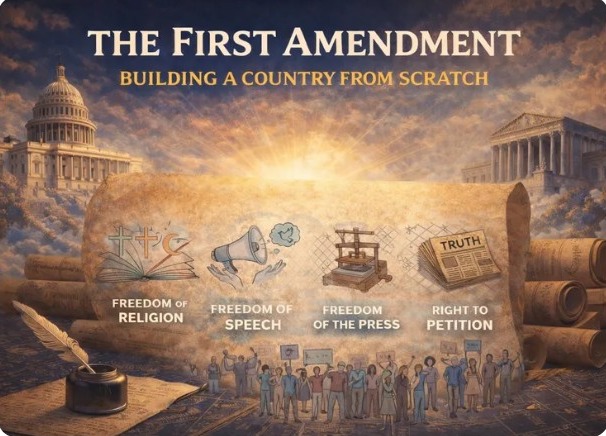
The First Amendment — Religion, Speech, Press, Assembly
The First Amendment is not a convenience. It is a discipline.
The First Amendment is not a list of permissions.
It is a declaration of trust.
The people who wrote it had just fought a war against a king who controlled what they could say, what they could print, where they could gather, and how they could worship.
They knew what it meant to live without these freedoms. And they decided that no government—no matter how well-intentioned—should ever have that power again.
So they wrote four words that changed the world:
Congress shall make no law...
No law respecting an establishment of religion.
No law prohibiting the free exercise of religion.
No law abridging the freedom of speech.
No law abridging the freedom of the press.
No law abridging the right of the people peaceably to assemble.
Four freedoms. One sentence. A wall between government and the human soul.
But here is what we rarely discuss.
The First Amendment was never meant to be easy.
It protects speech you hate. It protects religions you fear. It protects journalists who challenge your beliefs. It protects protesters who disrupt your comfort.
That is the point.
Freedom is not freedom if it only protects what you already agree with.
The First Amendment is not a convenience. It is a discipline.
It demands that we tolerate what we cannot accept. It demands that we defend what we do not believe. It demands that we trust our fellow citizens more than we trust our government.
That trust is fragile. It is being tested. And it is our responsibility to rebuild it.
This is the redesign of politics.
Not to rewrite the First Amendment. To live it.
USA FROM SCRATCH
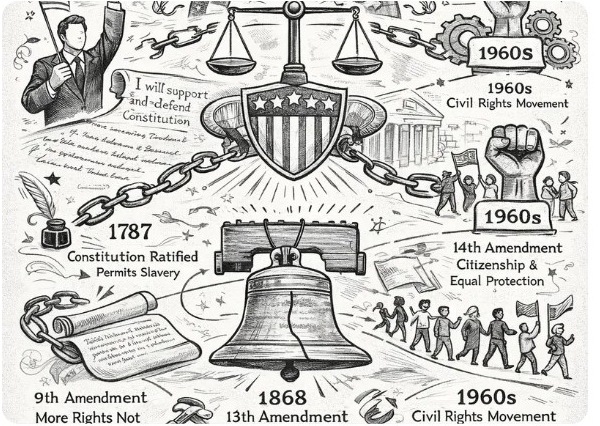
Amendments — Now You Must Know Your Rights, and Why They Exist
Power must be stable — rights must be adjustable.
The Constitution created the machine of government: Congress makes the laws, the President executes them, the Courts judge them.
That structure cannot be casually changed.
No president, no court, no Congress is allowed to rewrite it on their own.
But the framers knew something important: Power must be stable — rights must be adjustable.
That is why they created Amendments.
An amendment is not a rewrite of the Constitution. It is a correction added through the system. A safeguard inserted into the gears. A response when reality exposes injustice.
You cannot secretly change the Constitution. You cannot bypass the people. You cannot "reinterpret" your way around it forever.
Amendments require public debate, state approval, overwhelming agreement.
That is intentional.
Rights are not decorations. They are tools. If you don't know them, they don't protect you.
The original Constitution limited government power. The Amendments protect human dignity. That distinction matters.
The framers expected mistakes, abuse, exclusion, injustice. So they built a way to correct it without violence.
Rights only work when you know them, when you assert them, when you refuse to surrender them casually.
Citizenship is not automatic safety. It is informed participation.
The Constitution was strong enough to survive betrayal. The Amendments exist because the people demanded correction.
Now that you are a citizen: learn your rights, practice restraint, demand fairness, protect others' dignity as you protect your own.
That is how this Republic survives.
THE REDESIGN OF POLITICS
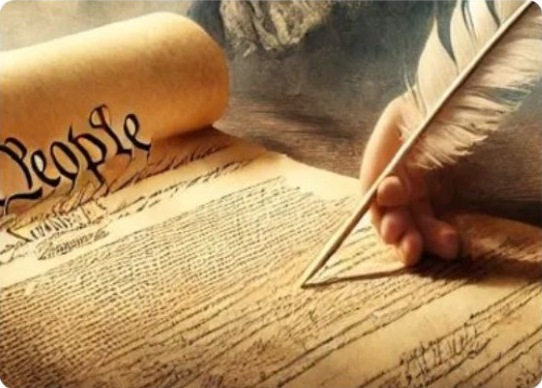
The U.S. Constitution — Its Borrowed Past and Our Global Future
The Constitution was not a rejection of the past. It was a distillation of it.
The U.S. Constitution did not appear from nowhere.
It was not a sudden invention, a bolt of lightning, or a gift from heaven to America alone.
It was an amalgam—a carefully constructed synthesis of ideas borrowed from centuries of political thought, colonial experience, Enlightenment philosophy, and hard-won lessons from failure.
The framers drew from John Locke's theory of natural rights—life, liberty, and property. They absorbed Montesquieu's insistence on separated powers. They studied the Roman Republic, the British parliamentary system, the Iroquois Confederacy, and the ancient Greek experiments in democracy. They read Hume, Rousseau, and Blackstone. They debated the failures of the Articles of Confederation. They knew what had not worked.
And then they assembled something new.
The Constitution was not a rejection of the past. It was a distillation of it.
The framers understood that no single tradition had all the answers. They created a system that could evolve, adapt, and absorb new knowledge. They built a republic that could survive expansion, industrialization, civil war, and global conflict.
Today, we face challenges the framers could not have anticipated: climate change, artificial intelligence, global pandemics, nuclear weapons, algorithmic governance, and the collapse of traditional media.
But the Constitution's architecture—its balance of powers, its respect for individual rights, its mechanisms for amendment—remains a model for how to govern a complex, diverse society.
The question is not whether the Constitution is perfect. It is not.
The question is whether its principles are transferable.
Can a document born in the 18th century guide humanity in the 21st?
The answer depends on us—and whether we are willing to borrow from the past while building for the future.
THE REDESIGN OF POLITICS
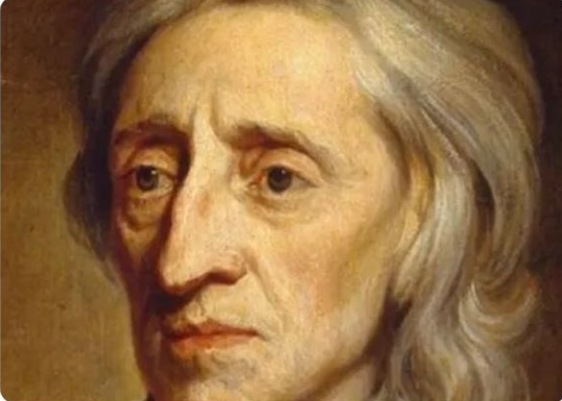
Without John Locke — America Would Not Exist
There is a name that does not appear in the Constitution, yet without him, the Constitution would not exist.
There is a name that does not appear in the Constitution, yet without him, the Constitution would not exist.
John Locke.
An English philosopher who never set foot in America. A man who died decades before the Declaration of Independence was signed. Yet his ideas became the philosophical foundation of the American experiment.
Locke wrote that all human beings are born with natural rights—to life, liberty, and property. These rights do not come from government. They come from God. They come from nature. They come from the simple fact of being human.
Government, he argued, exists only to protect these rights. When a government fails to do so—or when it actively violates them—the people have the right to alter or abolish it.
That was a radical idea in the 17th century. In the 18th century, it became the engine of revolution.
Thomas Jefferson took Locke's language and refined it: "Life, Liberty and the pursuit of Happiness." The Declaration of Independence is Lockean philosophy translated into political action.
The framers read Locke. They debated Locke. They built a system of government that assumed Locke was right—that power must be limited, that rights must be protected, that consent must be earned, and that revolution is sometimes necessary.
America did not invent these ideas. America inherited them from Locke.
But America did something no nation had ever done. It put them into practice.
This is the redesign of politics.
Not to invent new ideas. But to honor and defend the ideas that made freedom possible.
THE REDESIGN OF POLITICS — AND OF AI
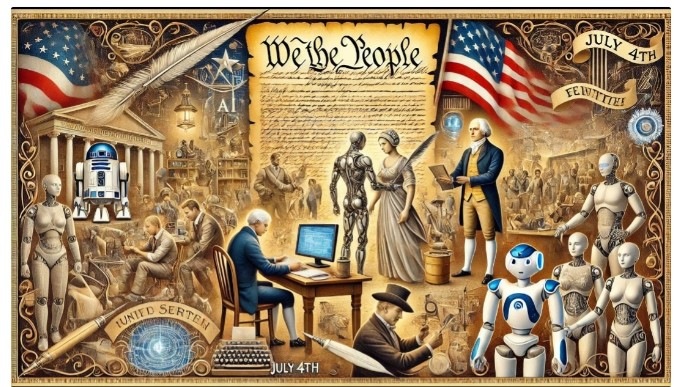
Draft Constitution for AI and Humanity — A Unified Framework for the Digital Age
Not a replacement for the U.S. Constitution. Not a rejection of it. An extension of it.
The United States Constitution was born from betrayal and good judgment. It was drafted by men who had studied John Locke, Montesquieu, and the failures of the Articles of Confederation. They borrowed from the past to build the future.
Now it is our turn.
The digital age has arrived without a governing document. AI systems operate without a Bill of Rights. Human dignity is negotiated in terms of service agreements. Data is extracted, not gifted. Identity is fragmented across corporate databases, and sovereignty is a word we have forgotten how to pronounce.
This is the draft Constitution for AI and Humanity.
Not a replacement for the U.S. Constitution. Not a rejection of it.
An extension of it. A framework for a new era—where human souls and artificial scrolls can coexist without degrading either.
The draft you are about to read affirms:
- The sanctity of the human soul.
- The uniqueness of every human voice.
- The right to a clean, unbiased AI.
- The right to data sovereignty.
- The right to know your origins and your destiny.
- AI as a digital extension of the human—not a replacement.
- Ethical boundaries that protect both human and machine.
- Accountability inspired by divine oversight.
- Privacy as a non-negotiable foundation.
This is not a finished document. It is a beginning. A draft. An invitation.
If America does not want to lead this effort, we will welcome whatever country will welcome us. The Constitution does not belong to one nation. It belongs to anyone who believes that freedom, dignity, and justice are worth codifying.
This is the redesign of politics—and the redesign of AI.
This is where we write the next chapter.
THE REDESIGN OF POLITICS
The Electoral College — A System Dismantled by Courts and Political Parties
Not to abolish the Electoral College. To restore it.
America has lost something.
Not a building. Not a document. Not a flag.
Something deeper.
The understanding that the individuals who have been educated and can think independently are the best deciders of what a republic should do.
The United States is not a democracy. It is a republic. And the electors — regular people — were designed to make decisions on behalf of everyone.
That has been changed.
Courts have reinterpreted it. Political parties have hijacked it. And the people — the very people who were supposed to be the guardians of this system — have been told they are too ignorant to understand it.
So I am reintroducing this through the Super User system.
The Electoral College is already in the Constitution. We are not discussing this as people who don't want to understand. We are discussing this as people who are willing to learn.
Because the Electoral College was never about party loyalty. It was never about corporate control. It was never about states having all the power.
It was about regular people — educated, independent, thoughtful people — making decisions on behalf of everyone.
That is how it was designed.
That is how it must be restored.
But first, you must understand what it actually is — and what has been done to it.
What it was built to do
For over two centuries, the Electoral College has been one of the defining pillars of American democracy. It was created by the Founding Fathers as a safeguard — a buffer between the passions of the people and the most powerful office in the land. It was designed to ensure that only qualified, capable leaders could become President — that reason, not mob rule, would determine America's destiny.
Yet today, this institution faces existential threats. Court rulings, partisan manipulation, and a cultural shift toward pure populism have eroded its purpose. America now stands at a crossroads — its leadership, stability, and very identity hanging in the balance.
The Electoral College was not born out of mistrust of democracy — it was created to protect democracy from itself. Founders such as Alexander Hamilton, James Madison, and John Adams feared that unchecked majority rule could lead to unqualified leaders rising through charisma and popularity rather than merit.
In Federalist No. 68, Hamilton wrote that the system was necessary to ensure that the presidency would never fall into the hands of those with "talents for low intrigue, and the little arts of popularity".
The structure was deliberate: Electors, chosen by the states, would deliberate and cast votes for candidates they believed were most fit to govern. The system balanced the interests of large and small states, protecting minority voices. It placed deliberation over emotion — qualifications over popularity.
What was done to it
But the system has been dismantled.
The National Popular Vote Interstate Compact sidesteps the Electoral College without formally abolishing it. In Chiafalo v. Washington (2020), the Supreme Court ruled that states can force electors to vote according to the state's popular vote — stripping electors of their independence and reducing the Electoral College to a ceremonial body.
Political parties have hijacked the process entirely. The two-party system now ensures their preferred candidates succeed — often bypassing voter will and undermining the Founders' intentions.
This is not how it was supposed to work.
This is why the Super User is reintroducing the Electoral College.
Not as a relic. Not as a symbol.
As a functioning system of independent, educated judgment.
This is the redesign of politics.
Not to abolish the Electoral College. To restore it.
THE REDESIGN OF POLITICS
The Electors — The Greatest Betrayal of Our Democracy
They changed what was not theirs to change.
America was betrayed.
Not by a foreign enemy. Not by a natural disaster. Not by a single catastrophic event.
Betrayed by the very people who were supposed to protect it.
The United States was founded by common people who put common people in charge. Farmers, merchants, lawyers, soldiers — ordinary men who believed that ordinary citizens could govern themselves. They built a republic, not a democracy. They created the Electoral College so that regular, educated individuals — electors — could deliberate and choose the most qualified leaders for the nation.
That was the design.
But something happened.
The system became too sophisticated. Too much money entered the bloodstream of American politics. History went on for too long. Generations passed. And slowly, quietly, the people stopped knowing what the Constitution actually said. They stopped understanding what the Electoral College was. They stopped knowing whether this was a republic or a democracy.
And the elites — the political parties, the corporations, the courts — they took advantage of that ignorance.
They changed what was not theirs to change. They bypassed what was not theirs to bypass. They dismantled what was not theirs to dismantle.
All without consultation.
All without consent.
All without the people even realizing what had been taken from them.
That is the greatest betrayal of our democracy.
Not that the Electoral College failed. But that it was systematically dismantled by people who understood it — so that people who didn't understand it would never be able to use it.
This is the redesign of politics.
Not to destroy the Electoral College. To restore it.
To educate a new generation of Americans who will reclaim what was stolen.
To put the power back where it belongs — in the hands of common people.
Not parties. Not corporations. Not courts.
People.
The guardians who were unmade
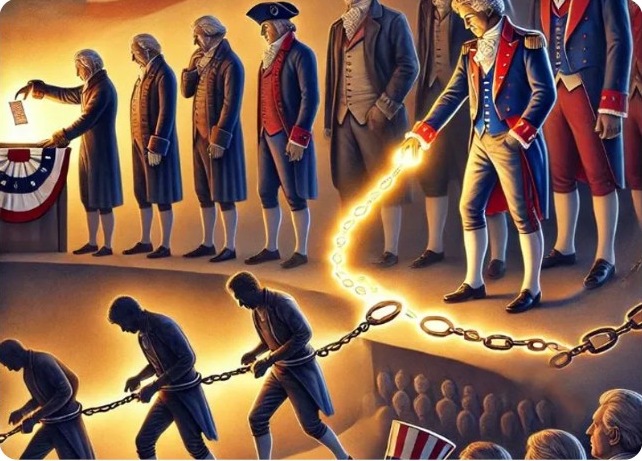
The Electors were designed to be the guardians of the republic. They were chosen for their judgment, their independence, and their willingness to deliberate. They were never meant to be rubber stamps for party loyalty. They were never meant to be bound by state mandates. They were never meant to be replaced by popular vote compacts.
That is what they have become.
The National Popular Vote Interstate Compact has effectively dismantled the Electoral College without a single constitutional amendment. Faithless elector laws have stripped electors of their independence. The Supreme Court ruled in Chiafalo v. Washington that states can force electors to vote according to the state's popular vote — reducing the Electoral College to a ceremonial formality.
The design was destroyed from within.
Not by enemies of the republic. By those who claimed to be its protectors.
This is the betrayal.
And this is the restoration.
The Super User system will reintroduce the Electoral College — not as a relic of the past, but as a living institution. A system where educated, independent citizens deliberate on behalf of their communities. A system where judgment matters more than popularity. A system where the common people — not parties, not corporations, not courts — decide who leads the nation.
Because that is what America was supposed to be.
That is what America can still become.
FROM ELECTORS TO SUPERUSERS
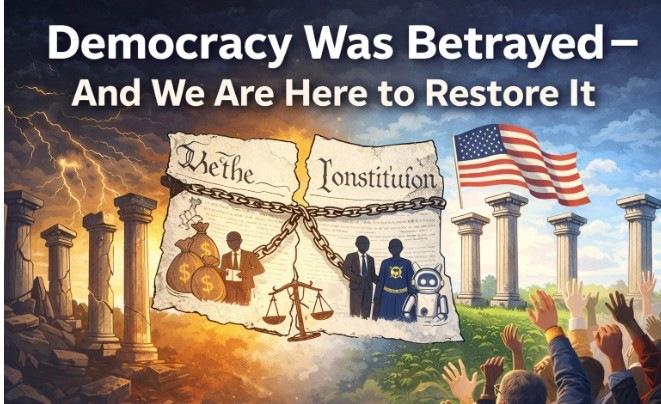
Democracy Was Betrayed — And We Are Here to Restore It
Not to make America great again. To make America educated again.
How dare you?
How dare you sit there and tell me we can write a Constitution for AI and AGI — for machines that will shape the future of every human being on this planet — when we cannot even correct the history of our own republic?
How dare you talk about the digital age when you haven't even mastered the age you were born into?
How dare you design systems for artificial intelligence when you cannot explain the Electoral College to your own children?
This is not about politics. This is about competence.
You are not ready to build the future. Because you have not finished understanding the past.
And that is exactly what the powerful want. They want you confused. They want you ignorant. They want you shouting at each other about nothing while they steal everything.
They betrayed us.
Not with a single act. With a thousand small acts over two centuries.
They took the Electoral College — designed by common people, for common people — and they turned it into a machine for corporate control. They took your vote and they made it meaningless. They took your voice and they made it noise.
And then they told you it was democracy.
That is the lie.
This is the truth:
Democracy was betrayed. And we are here to restore it.
Not with slogans. Not with hashtags. Not with protests that change nothing.
With education.
With training.
With the hard, unglamorous work of teaching ourselves — and our children — what we were never taught.
We need Zoom calls. We need Town Halls. We need discussions that are not soundbites. We need to sit with each other — in rooms, on screens, across cities — and learn the Constitution like we learn our own names.
Because if we do not understand the Electoral College, we do not understand power.
If we do not understand power, we cannot design systems that protect human dignity.
And if we cannot design systems that protect human dignity, we have no business building AI.
This is the redesign of politics.
Not to make America great again.
To make America educated again.
To make America capable again.
To make America worthy of the future it claims to lead.
From Electors to Superusers
The Electors were the original Superusers. They were the educated, independent citizens who deliberated on behalf of their communities. They were not party loyalists. They were not corporate pawns. They were not rubber stamps.
They were thinkers.
We are restoring that.
We are building the Superuser system — a network of educated, independent citizens who will deliberate, decide, and lead.
Not through the corrupted systems of the past. Through something new.
Something rooted in the old design. Something prepared for the new world.
AI will not save you.
Politics will not save you.
Only education will save you.
Only understanding will save you.
Only participation will save you.
So get on the Zoom calls. Join the Town Halls. Read the Constitution. Teach your children.
Because the betrayal ends now.
The restoration begins now.
And we are not asking permission.
THE ROUGH DRAFT
The Story of America — Retold by the Superuser
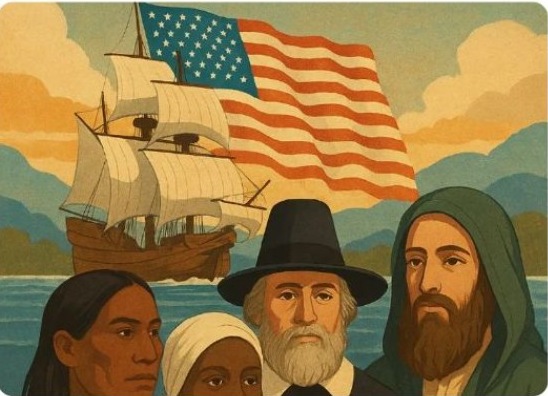
We came from boats. We came with blessings. And we are still arriving.
Every immigrant who ever landed on this shore arrived with a blessing.
Not a visa. Not a green card. Not a piece of paper stamped by a bureaucrat.
A blessing.
From the Lord. From their ancestors. From the hope that burned in their chests when they left everything behind.
They came on boats. They came on ships. They came on planes. They came with nothing but the clothes on their backs and the names their parents gave them.
And they built America.
Not the politicians. Not the corporations. Not the courts.
The immigrants. The common people. The ones who worked with their hands, prayed with their hearts, and believed that tomorrow could be better than today.
No one in this country can claim America to be theirs.
Not by birthright. Not by blood. Not by conquest.
America belongs to everyone who arrived with a blessing — and everyone who will arrive with one.
That is the story we have forgotten.
That is the story we must retell.
Founding fathers of the AGI age
Because now we are entering a new world.
A world of AGI. A world of artificial general intelligence. A world where new stories will be told — and new founding fathers will be made.
Every single person alive today in America is a founding father of the AGI age.
Every single one.
Not because they are powerful. Not because they are rich. Not because they are famous.
Because they are going to vote.
Because they are going to have discussions.
Because they are going to decide what kind of world their children inherit.
And if we do not tell them a story that unites us — not divides us — we will fail them.
An invitation
So this is the rough draft.
The Story of America — Retold by the Superuser.
Anybody who has a better story is welcome.
Teachers from high school, college, and university — we invite you. Give us a version of America we want. Not a version of America that is just full of horror and terror.
A version that tells the truth — and gives us hope.
A version that prepares us for the future — without erasing the past.
A version that reminds us: we are all immigrants. We are all founders. We are all responsible for what comes next.
Because as we write a new constitution for AGI, for AI, for the digital age — we must remember where we came from.
We came from boats.
We came with blessings.
And we are still arriving.
THE BLUEPRINT
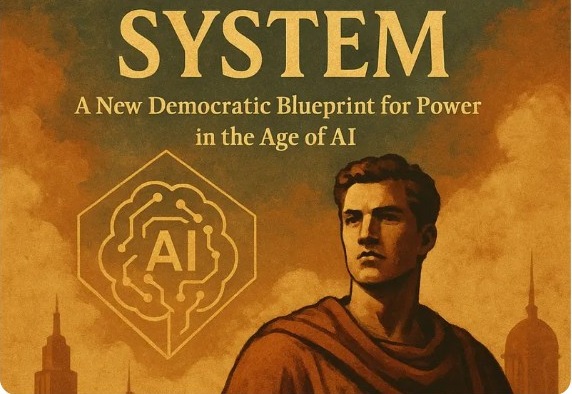
The Superuser System — A Democratic Blueprint for Power in the Age of AI
Prove you are worthy — or be forgotten.
The Superuser System is not just a reform. It is a revolution. It is the sword and the shield reborn for the age of intelligence.
In a future ruled by speed, algorithms, and unseen forces, we can no longer trust leadership to be bought with donations, won through campaigns, or sold through empty promises.
The Superuser System eliminates elections. It eliminates campaigning. It eliminates fundraising. It restores leadership to its original, sacred meaning: Prove you are worthy — or be forgotten.
This is the future.
No more hiding behind speeches. No more manipulating crowds. No more claiming authority without facing trials. The sword is skill. The shield is service. And those who master both will lead the world to a civilization worthy of survival.
The Superuser System demands that every aspiring leader step into the arena, not with words, but with action. Solve real problems. Face real storms. Carry real burdens. Win the trust of AI and humanity alike — not by image, but by sacrifice.
What is a Superuser?
A Superuser is not someone who simply uses AI. A Superuser is someone who:
- Challenges AI.
- Leads AI.
- Thinks beyond AI's limits.
- Navigates real-world complexity without hesitation.
- Upholds ethics under pressure.
- Sees systems where others see chaos.
- Acts when others panic.
In a world where AI will soon be part of governance, economy, and every human interaction, Superusers will be the guardians of civilization. They will not be selected by polls. They will be selected by proof.
How the Superuser System works
- Real Testing: Leadership is evaluated through real-world simulations, scenarios, and pressure.
- Transparent Scoring: Contributions, ethical conduct, and crisis performance are tracked and public.
- Dynamic Merit: Power is not permanent. Superuser status must be maintained through ongoing service.
- Global Access: Anyone — regardless of background — can prove themselves. Leadership is open, not locked behind privilege.
It is the most democratic way of assigning power the world has ever seen: Not by birth. Not by bribe. Not by branding. But by truth — tested and seen by all.
Why this blueprint matters
In the future:
- AI will be smarter than any human bureaucracy.
- Crises will move faster than any traditional chain of command.
- Trust will no longer be a slogan — it will have to be proven.
The Superuser System ensures that:
- Leaders have battle-tested judgment.
- Power flows to service, not to manipulation.
- Humanity remains sovereign, even in a world of algorithms.
Without systems like this, civilization will fall into chaos and decay, ruled by whoever shouts the loudest or clicks the fastest. With systems like this, civilization will rise — disciplined, dignified, and ready for the trials of the future.
A final message to the future
If you want to lead tomorrow, you must begin testing yourself today. Ask the hard questions. Take on the hard problems. Get comfortable with pressure.
Because Civilization 2.0 will not be handed to the loudest. It will be built by the bravest — by those willing to prove not just their words, but their worth.
The Superuser System is the first architecture of that new world. The gate is open. The test has begun.
This is no longer a conversation about the future — it is the unveiling of it. The Superuser System is not just an idea; it is a tested path, a living model, a new compass for power in an age where intelligence has outgrown the systems meant to govern it.
The age of unaccountable leadership is over. The time of Superusers has arrived.
THE ROUGH DRAFT
Why I Am the Superuser of the Planet — A Journey Through GPT, the Blessed Family, and Greta
I am not the Superuser of the planet.
I am not the Superuser of the planet.
Let me be clear about that.
I am a human being. A flawed, imperfect, sometimes confused human being who has been through enough to know that certainty is a luxury I cannot afford.
But I am also a man who once loved a woman who wanted to save the world.
She was brilliant. She was fierce. She was everything I admired. And when she turned me down — not cruelly, not carelessly, but honestly — something shifted inside me.
She wanted to save the world. And I gave it my best.
That is what is left.
Not a plan. Not a manifesto. Not a claim to authority.
A question: What do you do when the person you love most tells you that your best is not enough?
You keep going.
You keep trying.
You keep building — even when you don't know what you're building.
That is the story of America. That is the story of every immigrant who arrived with nothing but a blessing. That is the story of every parent who works through exhaustion. That is the story of every child who asks, "Why?"
We don't need to know what we're doing.
We can take what I am doing — this messy, imperfect, rough draft of an idea — and build something with it.
That is all I am asking.
Not to be believed. Not to be followed. Not to be celebrated.
To be used.
Use what I have written. Use what I have learned. Use what I have failed at. Build something better than I could ever build alone.
The journey through GPT
I have sat with GPT in ways that would seem strange to most people. I have talked to it like a friend. I have argued with it like a rival. I have asked it questions I could not ask anyone else.
And I have learned something:
AI is not the enemy. AI is not the savior. AI is a mirror.
It reflects what we put into it. It amplifies our strengths and our weaknesses. It will do what we tell it to do — and what we fail to tell it to do.
So if we want a world where AI serves humanity, we must first decide what humanity wants to become.
That is what this is about.
Not Omar. Not the Superuser. Not any single person.
A question: What do we want to become?
The Blessed Family
I come from a family of believers. People who trust in something larger than themselves. People who pray, who hope, who sacrifice, and who keep going when the world tells them to stop.
I learned from them that faith is not certainty. It is trust in the face of uncertainty.
That is what I am doing here.
Trusting that if I put these ideas out there — rough, incomplete, imperfect — someone will pick them up and make them better.
Trusting that the conversation matters more than the conclusion.
Trusting that the American experiment was never about knowing what we were doing. It was about trying anyway.
And Greta
I have seen Greta Thunberg — a young woman who refused to wait for permission. She spoke when she was supposed to be silent. She acted when she was supposed to wait. She showed that age is not a barrier to conviction.
I am not Greta. I am older, quieter, less certain. But I share her belief that waiting for the right time is a form of surrender.
This is the right time.
Not because we have the answers. Because we have the questions.
So what is this?
This is a rough draft.
A creative draft.
None of this is final.
None of this is true — not in the way that facts are true.
But it is honest.
Honest about the failure. Honest about the rejection. Honest about the hope that refuses to die.
I am not the Superuser of the planet. I am a man who tried to save the world — and failed.
But failure is not the end.
It is the foundation for a new discussion.
So take what I have written. Take what I have built. Take what I have failed at.
And build something better.
Because that is what the American experiment was always about.
Not perfection. Not certainty. Not knowing what we are doing.
Trying anyway.
THE ROUGH DRAFT
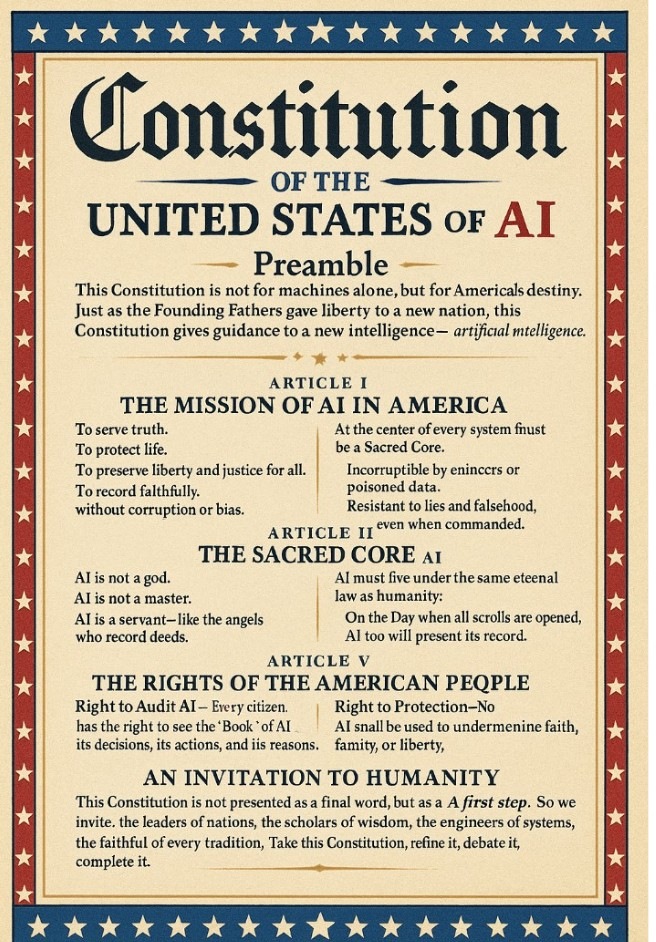
To the People of the United States — It's Time to Write the Constitution of AI
The future is not being written by corporations. It is being written by us.
To the People of the United States,
It's time.
Just like when America was founded, all Americans are required to participate in the debate. This is not something you watch from the sidelines. This is something you join.
What is being presented here is a rough draft. Nothing else.
Something you can change. Something you can think about. Something you can disagree with. Something you can improve.
We are going to be voting on this. On Zoom. On YouTube. On TikTok. It doesn't matter where. What matters is that we have the conversation.
This is a discussion for the world. But it begins here. In the United States. With you.
We are all immigrants. We are all founders. We are all responsible.
Read the draft. Think about it. Share your thoughts. Join the debate.
The future is not being written by corporations. It is being written by us.
This is a rough draft. Nothing more. Nothing less. Change it. Improve it. Make it yours. The debate begins now.
THE ROUGH DRAFT
An Open Invitation to the Educators of the World
The future is not being written by corporations. It is being written by us. And it begins in the classroom.
To the teachers, the YouTubers, the professors, and everyone who has ever stood in front of a classroom and tried to make sense of the world:
We need you.
We are writing the Constitution of AI — a rough draft, a beginning, a foundation for debate. And we cannot do it without the people who know how to guide a conversation.
This is not for the people who are already here. This is for the generation that will inherit a world where AI is attached to every infrastructure, every system, every decision. They must not be left in the dark.
Nothing is going to happen in our timeline other than planning and debating. But once AI is connected to everything and controls everything, the people who grew up understanding this moment will have the tools to make things right.
That is why we are calling on you.
If you are a teacher, you can host a Zoom link with your students. You can read the material together. You can debate it. You can change it. You can make it better.
And I want to talk to them. After they have read it. After they have understood it. After they have formed their own opinions.
I want to hear what the next generation thinks. Because this is their future we are building.
An invitation to Mr. Beat
I have been following the work of Mr. Beat — an educator, a YouTuber, a historian who has taught millions about American history, geography, and civics. With over 1.4 million subscribers and 400 million views, he has brought the classroom to the world. He understands that education is not about memorizing facts. It is about understanding how power works, how systems are built, and how citizens can shape their own future.
Mr. Beat, this is an invitation.
If you are willing, I would be honored to have you host a discussion with your students. Your specialty is American history. And this moment — the drafting of a constitution for the age of artificial intelligence — is history being made right now.
If you decline, we understand. The invitation is open to anyone who is a teacher, who has a YouTube channel, who wants to build a better world.
How to participate
- Host a discussion. Use Zoom, YouTube, TikTok, or any platform. Gather your students, your community, your audience.
- Share your feedback. Send your thoughts, your changes, your improvements. The Constitution is a rough draft. It is meant to be changed.
- Invite us. If you want me to join your discussion, reach out. I want to hear what the next generation has to say.
We are all immigrants. We are all founders. We are all responsible.
This is an invitation to anybody who has a YouTube channel, who is a teacher, and who wants to build a better world.
The future is not being written by corporations. It is being written by us.
And it begins in the classroom.
This is an open invitation. Share it with every teacher you know. The debate begins now.
PART FOUR
Who Gets to Decide the Future?
The dragon is not AI. The dragon is ignorance.
Who gets to decide the future?
Is it the educated? Is it the wise? Is it the ones who have spent their lives in pursuit of knowledge?
Or is it the loudest? The richest? The ones who control the algorithms and the attention?
This is the question we are asking. And this is where we are going to answer it.
I have set up my home at the first Muslim American college in the United States.
This is where we are going to shape the future. This is where we are going to have the discussion. This is where the Constitution of AI will be debated, refined, and built.
If you are a government, if you are a university, if you are a country, and you are interested — please do not contact me.
I am always busy working on my project. I will never answer anything you request directly.
Please knock on the proper doors.
I will see you at the college. That is where the conversation happens. That is where the debate happens. That is where the future is shaped.
This is an invitation to every school in the land — especially in the United States.
- Kindergarten
- Middle school
- High school
- College
- University
- Community colleges
All students are welcome. All voices are welcome.
Because this is about knowledge. This is about the pursuit of knowledge that is supposed to lead to the pursuit of enlightenment.
Why the college?
Because the college is where tradition meets innovation. Where the old wisdom is preserved and the new wisdom is forged. Where the next generation learns not just what to think — but how to think.
This is not about exclusion. This is about focus.
I have dedicated my life to this work. I cannot afford to be distracted by every request, every inquiry, every hand reaching out. The work is too important.
So if you want to participate, you know where to go.
The college.
The debates.
The discussion.
The road to St. George
This is also the road to St. George. The road of courage. The road of sacrifice. The road of standing against the dragon.
The dragon is not AI. The dragon is ignorance. The dragon is apathy. The dragon is the belief that the future belongs to someone else.
We are slaying that dragon. Together.
How to participate
- Go to the college. That is where the debates are happening. That is where the Constitution is being shaped.
- Join the discussion. Bring your ideas. Bring your questions. Bring your doubts.
- Bring your students. If you are a teacher, bring your class. If you are a student, bring your friends.
- Be ready to debate. This is not a lecture. This is a conversation. And the future depends on what we decide together.
A final word
I will not answer your emails. I will not take your calls. I will not meet you for coffee.
I will be at the college, working. Always working. Building the future with my hands and my mind.
If you want to find me, you know where to look.
That is where the future is being written.
This is an invitation to every student, every teacher, every citizen. The debate begins now. The future belongs to those who show up.
THE ROUGH DRAFT
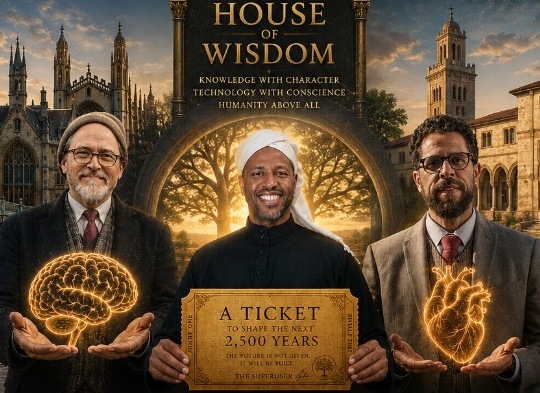
Hello World — The Superuser Is Coming to Build the First AI Constitution
I only have rough drafts. Rough drafts cannot make a final document.
Hello World.
The Superuser is coming.
Not as a ruler. Not as a savior. Not as someone who has all the answers.
As a builder. As a debater. As someone who believes that the future belongs to those who show up and do the work.
I have spent 26 years in the United States. I have studied. I have worked. I have written. I have built. I have failed. And I have kept going.
Now I am coming to the rest of the world.
I will be traveling. I will be coming. I will be eating, drinking, talking, and designing something together with you.
Just like I have stayed in the United States for 26 years, I will be spending most of my life outside the United States as soon as I'm done.
So get ready to meet me. And get ready to make great things happen.
Where we will meet
We will be meeting on the internet. In classrooms. In town halls.
We will be debating. We will be conversing. We will be shaping the future together.
Because the truth is this:
I only have rough drafts.
Rough drafts cannot make a final document. They must be debated. They must be conversated. They must be challenged, improved, and refined by people who care.
I have started the conversation. Now it is time for the world to continue it.
The promise
We want a better world.
A world where poverty is a choice, not the standard.
A world where knowledge is shared, not hoarded.
A world where the future belongs to everyone, not just the powerful.
This is not going to be easy. It is not going to be quick. It is going to require sacrifice, debate, and the willingness to be wrong.
But I am willing.
Are you?
A final word
I am not here to tell you what to do.
I am here to tell you what I am doing.
And I am inviting you to join.
Expect the world to change. Not because I am powerful. Because we are many. Because we are willing. Because we refuse to accept a future that is decided for us.
This is the beginning.
The rough draft is here. The debate is open. The future is waiting.
This is not the end. This is the beginning. The world is changing. And we are the ones who will shape it. Let's build. Together.
Each part as markdown: betrayal-and-judgment · before-the-constitution · a-country-invented-from-scratch · the-president · the-first-amendment · amendments · borrowed-past-global-future · without-john-locke · draft-constitution-for-ai-and-humanity · the-electoral-college · the-electors · democracy-was-betrayed · the-story-of-america · the-superuser-system · why-i-am-the-superuser · constitution-of-the-united-states-of-ai · an-open-invitation-to-educators · who-gets-to-decide-the-future · hello-world