Texas State Room
Attorney General — Texas
Articles, candidate report cards, office explainers & public accountability
Texas 2026 — and the Road Beyond
Election: November 3, 2026. Research checked: October 8, 2026.
The state's certified printed choices are Mayes Middleton, Nathan Johnson and Tom Oxford. All three receive space here. The statewide certified write-in list contains no Attorney General candidate. Primary contenders and fundraising records are not substituted for the current certified ballot.
WHAT THE ATTORNEY GENERAL CAN ACTUALLY DO
The office represents Texas in litigation, advises authorized state officials, issues legal opinions, approves public bonds, enforces child-support orders and administers crime-victim compensation. Its divisions address consumer protection, antitrust, environmental litigation and open records. It is the state's lawyer; it cannot provide private legal representation to an individual voter.
Criminal prosecution has legal limits. The office's duties page says original prosecutorial jurisdiction exists in some circumstances, while most prosecutions are initiated at a local prosecutor's request. A candidate's promise to prosecute every violation does not establish that authority. A proposed expansion must be tested against constitutional limits, statutes and controlling court decisions.
Official duties and responsibilities · Office divisions
ALL CERTIFIED CHOICES
| Candidate | Printed ballot party | Current candidate source |
|---|---|---|
| Mayes Middleton | Republican | Campaign and platform |
| Nathan Johnson | Democratic | Campaign |
| Tom Oxford | Libertarian | Party profile and August 11 questionnaire |
Secretary of State printed certification, August 28 · Statewide write-in certification
MAYES MIDDLETON
Republican — printed ballot. The Senate's District 11 page documents House service in 2019–2022 and Senate service from 2023, his law degree and occupation as an oil-company executive. His campaign prioritizes border enforcement, abortion restrictions, sex-based sports and facilities rules, election enforcement, consumer protection, open records and government waste. It also seeks broader prosecution powers. Campaign descriptions of legislative success and financial sacrifice require verification through bills, votes and disclosures.

Campaign: proposals and biography · Official Senate record and bill links
Questions: Which current legal powers would support each enforcement proposal, and which require a law change? How would you manage potential conflicts involving energy companies and other former business interests? What published standards would determine whether litigation serves Texans, with what costs and outcome measures? How would enforcement preserve due process and equal protection?
NATHAN JOHNSON
Democratic — printed ballot. The Senate identifies Johnson as District 16's senator. His campaign presents litigation and mediation experience and priorities involving consumer scams, competition, corruption, constitutional rights and cooperation with local prosecutors. It proposes improving routine services such as child support and legal opinions. Its assertions about opponents and its bill-success totals are campaign claims until independently checked; they are not adopted findings here.
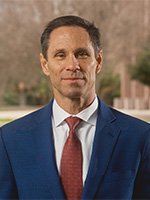
Campaign · Detailed priorities · Official Senate record and bill links
Questions: What consumer-enforcement targets, staffing and budget would you establish? How would you investigate misconduct by allies using the same rules as opponents? Which child-support and open-records service measures would improve in the first year? How would you decide when to defend a state law, challenge federal action or seek a change through the Legislature?
TOM OXFORD
Libertarian — printed ballot. The national party publishes a candidate profile, and the Texas party identifies him in its statewide slate. A current standalone campaign website has not been verified. There is, however, attributable policy evidence: SNAP publishes his questionnaire submitted August 11, 2026. He calls for expert-informed decisions, protection of research funding, and restrictions on data-center construction until water and grid impacts are addressed. These are his proposals, not verified factual conclusions or actions already taken.

Party candidate profile · Texas party candidate list · Dated policy questionnaire
Questions: Which legal authority would permit your proposed data-center restrictions, and what evidence would trigger or end them? What are your child-support, consumer-protection and open-records priorities? How would you select independent experts and disclose their interests? Which professional and case records should voters examine to assess your readiness to lead the office?
The questionnaire is a previously published candidate response to another organization. It is not a response submitted to OmarArizona.com. A party platform is not automatically a personal commitment by every nominee.
A COMMON ACCOUNTABILITY TEST
For each candidate, ask for three priorities with the statute or legal power, implementation mechanism, cost, target and deadline. Compare legal experience through attributable records, legislative claims through actual bills and votes, and proposed lawsuits through legal merit and likely public benefit. A number of lawsuits filed is not by itself an outcome measure.
Practical benchmarks include child-support processing and collections, timely open-records decisions, consumer recoveries and restitution, transparent litigation costs, conflicts screening and equal treatment. Targets should start from documented baselines, rather than invented numbers in this report.
CAMPAIGN FINANCE AND RECORDS — PENDING
The Texas Ethics Commission search is the official starting point. Contributions, expenditures, loans and cash on hand must be compared in the same named reporting window, using amended reports when applicable. A headline about personal funding or an ad buy is not a complete comparison.
This project defines low-funded campaigns as less than $100,000 in reported contributions in the same identified comparison period. Verified full-period classifications appear in the snapshot below. Missing reports mean unknown, not zero; every eligible campaign is included regardless of money.
Full professional records, newer finance reports and committee reconciliation, selected legislative votes, performance evidence and detailed legal-authority analysis remain pending. This first pass does not claim a completed investigation of any candidate's entire career.
PROVISIONAL REPORT CARD AND THREE VOICES
AI research / provisional view: this sourced candidate and proposal map, with all three currently unscored. California's nine-category framework considers experience, accountability, education, affordability, economic opportunity, civil rights and religious freedom for everyone, environment, practical office powers and measurable commitments. Commitment evidence can earn up to two points each for action, mechanism, authority, target and deadline. Numerical ratings need identified documents and adequate comparable evidence; no total out of 90 is invented.
Voter response: Omar and readers can publish their assessments. Candidate response / self-assessment: each candidate can provide corrections, records and an office-specific assessment. No direct response to this report, voter tally, Omar score or endorsement is claimed. Forecasts, if added later, will remain separate from assessment scores.
PHOTO SOURCES
Middleton: Texas Senate · Johnson: Texas Senate · Oxford: Texas party



All three photographs come from the identified candidate or government sources; none is generated.
DATED CAMPAIGN-FINANCE SNAPSHOT
Checked October 8, 2026; July semiannual reports due July 15, covering periods ending June 30. These are reported figures from the Texas Ethics Commission July totals, cross-checkable through the official totals index and July balance list. They are an identified historical snapshot, not current October balances. Newer pre-election filings, amendments, itemized donors and other committees remain to be reviewed.
The June 30 contribution-maintenance balances and outstanding loans share a measurement date. Contribution and spending totals cover the different start dates shown: compare flows only between rows with identical periods. Do not treat a shorter-period total as a full first-half-year total or rank campaigns across unequal windows. Contributions can include noncash support; balances are not net wealth and loans are not donations. The reported total lines are used without adding the small-item subtotal a second time.
| Candidate / reporting entity | Period for flows | Contributions | Expenditures | Contributions maintained June 30 | Outstanding loans June 30 | TEC filer / report |
|---|---|---|---|---|---|---|
| Mayes Middleton (David M.) | 2026-05-17–2026-06-30 | $911,116.75 | $3,249,301.52 | $117,508.86 | $5,200,000.00 | 00081727 / 101061137 |
| Nathan Johnson | 2026-05-17–2026-06-30 | $363,911.88 | $163,138.95 | $290,566.18 | $0.00 | 00081605 / 101057747 |
| Tom Oxford (Thomas E.) | 2026-01-01–2026-06-30 | $393.89 | $0.00 | $0.00 | $0.00 | 00055017 / 101056360 |
Low-funded definition: less than $100,000 in reported contributions for January 1–June 30, 2026. The complete-period rows meeting that disclosed threshold here are Tom Oxford (Thomas E.). Rows with later starts remain unclassified until preceding reports are reconciled; unmatched filings mean unknown, not zero. A zero shown above is an explicit reported line for that period, not a finding that the campaign did nothing or never raised funds. Funding does not determine inclusion, seriousness, eligibility or assessment score.